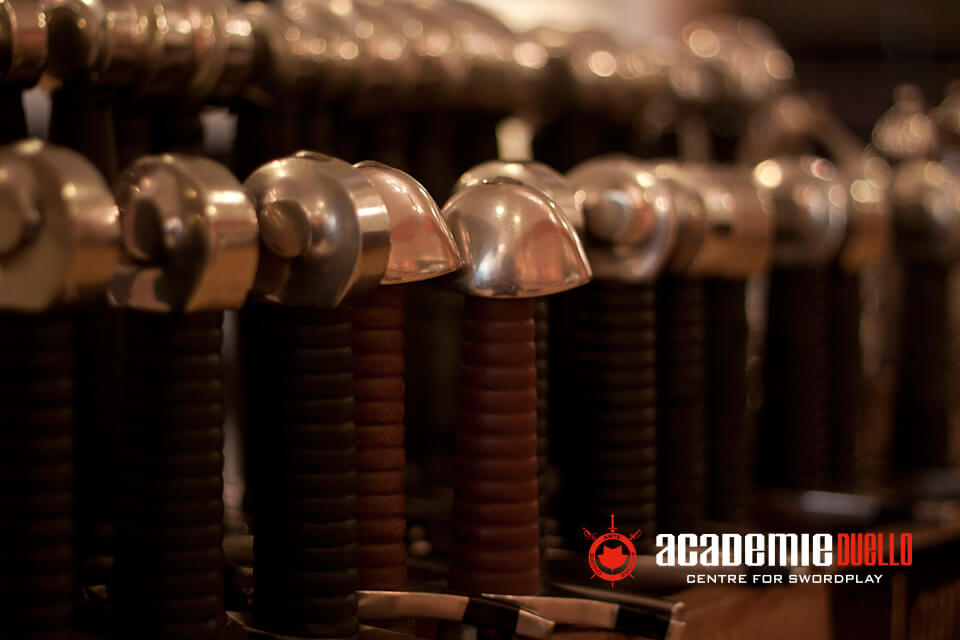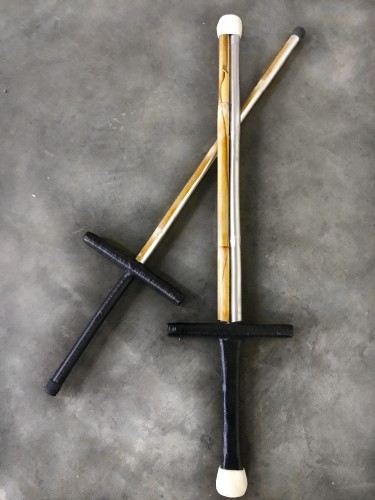
I’m a big fan of slow sparring as a training tool. It is an ideal way to focus on mechanics and precision, develop strategic and tactical awareness, and work on the necessary relaxation and fluidity required for high-speed combat in a more manageable setting.
The main challenge with slow sparring is that it is difficult to go slow, especially when you’re new to it. People commonly speed up when:
- They believe their body is in one place and suddenly find out that it is in another. At that moment they try to reconcile being out of position by hurriedly putting their body to where their mind thinks it “should” be.
- They have a moment of panic and their fight-or-flight response takes over. This commonly occurs when someone suddenly realizes they’re about to be struck.
- They see an opening and rush to take it. This can sometimes come from being overly competitive or done simply out of the excitement of realization.
These moments of sudden rushing happen in full speed combat as well. In a full-speed environment when these moments occur they manifest as over-wide parries, over-extended attacks, chasing, and freezing up. Slow fencing can help you become present to the strategic and mechanical flaws that lead to that rush and help you solve them on a fundamental level.
Developing Presence Over Speed
The following process and tips will help you learn how to do slow work well. Then through that ability, you can gain a greater presence in your overall learning and fighting.
Agree on a Speed
At Academie Duello we practice five speeds of fencing that you can learn about in this clip from my Longsword Fundamentals DVD and Duello.TV Longsword Fundamentals III course:
Before beginning slow sparring, agree verbally on a speed with your partner. Then use the salute (see next) to help you sync up.
Salute Slow
Stand across from your partner and make your salute at the agreed upon speed. This is an opportunity to get in sync with your partner and ensure, before combat begins, that you’re on the same page.
Saluting slow is also an ideal way to reset yourself, to bring yourself into the appropriate flow, and even to reset in the middle of a bout. A rule we use in slow sparring at Academie Duello is that if one person steps out and salutes, that their partner will match their salute and sync up speeds with them again. This creates an easy way for either person to reset their partner’s (or their own) speed.
As I move from the salute into guard, I continue in the flow of the speed of the salute. If my partner seems out of sync with me I might halt and make sure that we negotiate our desired speed a little more before we begin.
Inhale and Exhale at Speed
As I lift my sword to salute I inhale, as I lower my sword into guard I exhale. I match my breath with the rhythm of the fighting and continue to follow the relaxed breath throughout the fight. Holding your breath or quickening your breath can be good indicators that you have, or are about to, change speeds.
Breath has extraordinary physiological effects on your body. Be mindful of it and you’ll find that you can keep a much more relaxed approach to slow and fast sparring.
Smile
I stole this one from Roland Warzecha of Dimicator, who is also a big proponent of slow sparring as a training tool. Keeping a smile on your face also has a chemical effect on your brain and body that reduces stress and helps you keep relaxed. It’s also damn intimidating to an opponent!
Useful Tools for Staying Slow
Staying slow takes lots of practice. Don’t be surprised if you’re not good at it right away. Here are a few additional tools you can use to develop and benefit from slow sparring:
Use Speed 1
It can feel frustrating at first, but speed 1 is really easy to find and can have profound physical and mental benefits. If you ask the question “Am I going too fast?”—you are. Speed 1 is essentially as slow as you can go.
Fighting at speed 1 is like having super-perception. You can anticipate and react to your opponent’s movements at the earliest indication. Of course, they can also react to your movements, and from there a very interesting chess match begins. Know that at this speed combat might be long and protracted. It will also be a significant workout as you must sustain extensions and postures for longer periods that you would at high speed. That’s good!
Simulate Physical Forces
Slow sparring loses its benefits if you allow your sword to move in ways that defy physics. Make sure you use your knowledge of full-speed sparring to inform what occurs in slow speed sparring. If your opponent strikes your sword with good structure and timing, allow for your sword to be displaced, and use the appropriate technique to recover it, rather than allowing it to become an immovable wall.
Also, recognize that your sword’s movement can only deviate in very specific ways. Make sure you don’t have it turning any strange corners or zig-zagging its way to your opponent. Stay relaxed and flow with your weapon.
Be Curious
Turning on an attitude of curiosity can be a powerful tool for helping you get the most out of slow sparring. Don’t make winning your objective, instead make your objective the asking and answering of questions. You can read more about the process of curiosity in slow fencing in this post.
Choose to Lose
Sometimes competitiveness can get the best of us all. If you feel that for you or your training partners the desire to “win” is overcoming the desire to stay slow and learn, designate a winner in advance. This means you approach each bout knowing the outcome. From this space, you can choose to give appropriate challenge and focus on the fencing rather than the winning.
Slow Coach
One thing that can make a big difference is having someone on the sideline reminding you to stay slow. Simply having someone periodically calling out “stay slow” or “relax” can help you keep this front of mind.
I’d love to hear any tips that you have for keeping slow. Feel free to share them in the comments.
Happy slow and fast sparring everyone!
About the Author
Devon Boorman
Founder & Director
Devon Boorman is the Co-Founder and Director of Academie Duello Centre for Swordplay, which has been active in Vancouver, Canada since 2004. Devon's expertise centres on the Italian swordplay tradition including the arts of the Renaissance Italian rapier, sidesword, and longsword, as well as knife and unarmed techniques.