
Armoured Combat
Fighting in harness—where technique adapts to steel protection
Armoured combat represents the pinnacle of medieval martial arts. When warriors don steel harness, the rules of combat change entirely. Cuts that would be devastating against an unarmoured opponent glance harmlessly off plate, demanding entirely different techniques and tactics.
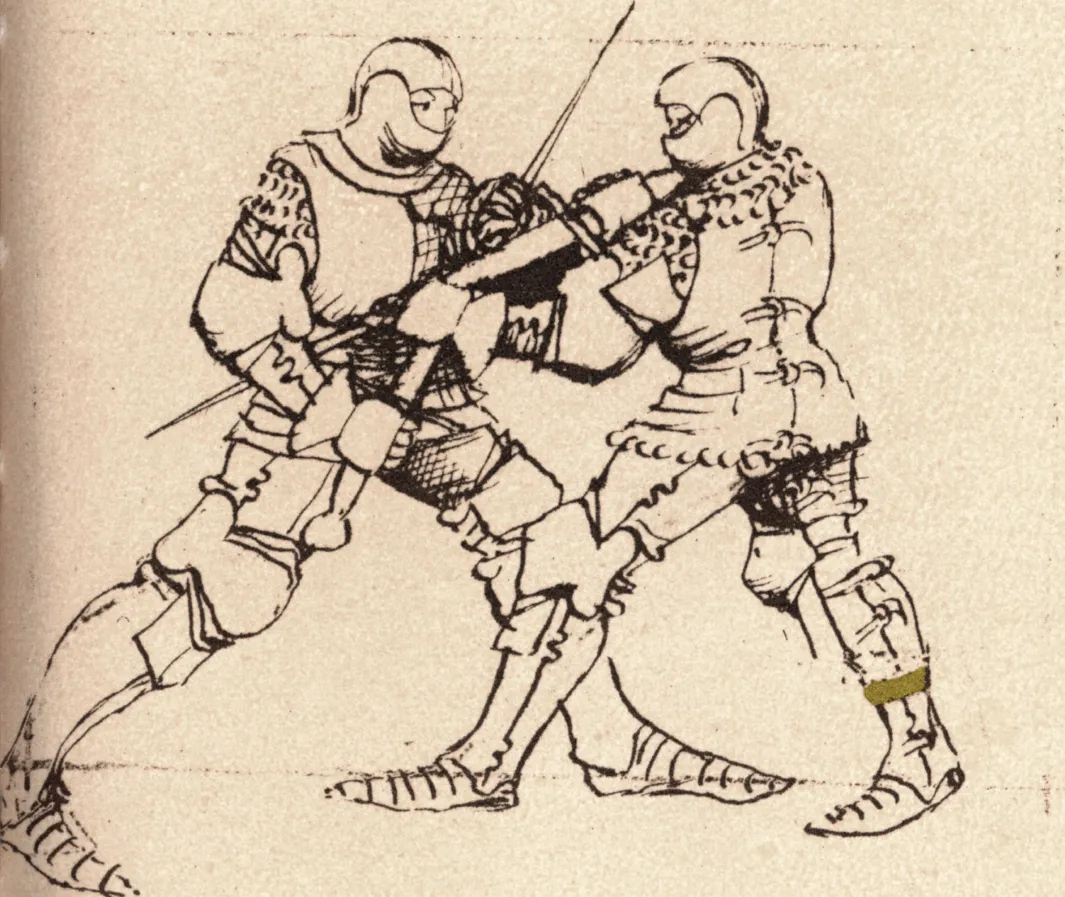
The Challenge of Armour
When steel meets steel
Plate armour was remarkably effective protection. A well-made harness could turn aside sword cuts, deflect arrows, and resist all but the most precisely placed thrusts. This forced medieval warriors to develop specialized techniques.
In armoured combat, the goal shifts from cutting and thrusting to finding the gaps—the visor slit, the armpit, the groin, the back of the knee. Weapons are used as levers to create openings, and wrestling becomes even more essential.
The poleaxe becomes the weapon of choice, its hammer face capable of delivering concussive blows through the helmet, its spike designed to pierce mail and find gaps in plate.
Armoured Combat Weapons
- Poleaxe: The knight's primary weapon for armoured duels
- Longsword: Used in half-sword grip for thrusting at gaps
- Dagger: The finishing weapon for close-quarters work
- Wrestling: Essential for creating openings and controlling opponents
Nature of the Art
Precision, power, and patience
Armoured combat demands a different mindset. The protection of steel grants patience—you can afford to wait for the perfect moment. But that same armour is heavy, and endurance becomes a factor in prolonged encounters.
Half-Swording
Gripping the blade with both hands for precise thrusts into armour gaps and powerful leverage.
Armoured Grappling
Wrestling techniques adapted for harness, using the armour itself as leverage points.
Murderstroke
Using the sword as a hammer, striking with the crossguard or pommel against armoured opponents.
The techniques of armoured combat are among the most sophisticated in the medieval fighting arts. They require mastery of unarmoured technique first, then the adaptation of those skills to the unique challenges of fighting in steel.
History
The art of the armoured knight
Armoured combat was the domain of the wealthy—only knights and men-at-arms could afford full harness. Judicial duels between armoured combatants were formal affairs with strict rules, fought to resolve disputes of honor or law.
Fiore dei Liberi devoted significant sections of his treatise to armoured combat, showing techniques with longsword, poleaxe, and dagger. The German tradition of Harnischfechten (fighting in harness) provides additional techniques and context.
At Academie Duello, armoured combat represents advanced study. Students first master the unarmoured arts before progressing to fighting in harness, where they apply familiar principles in an entirely new context.
Our Primary Sources
Fiore dei Liberi
Fior di Battaglia (1409)
Extensive armoured combat sections with longsword, poleaxe, and dagger.
German Harnischfechten
Gladiatoria, Talhoffer, and others
German traditions of armoured fighting with detailed technical instruction.
Train in Armoured Combat
Armoured combat is an advanced discipline within our Mastery program. Begin your journey with our foundational swordplay courses.