A knight is most traditionally a mounted warrior. Yet do they use different weapons from the saddle than they do from the ground? And which weapons are specifically those for horseback?
Broadly speaking, any type of weapon you can manage to use while on horseback is a mounted weapon, but historically some have proven more useful than others.
Cavalry Swords
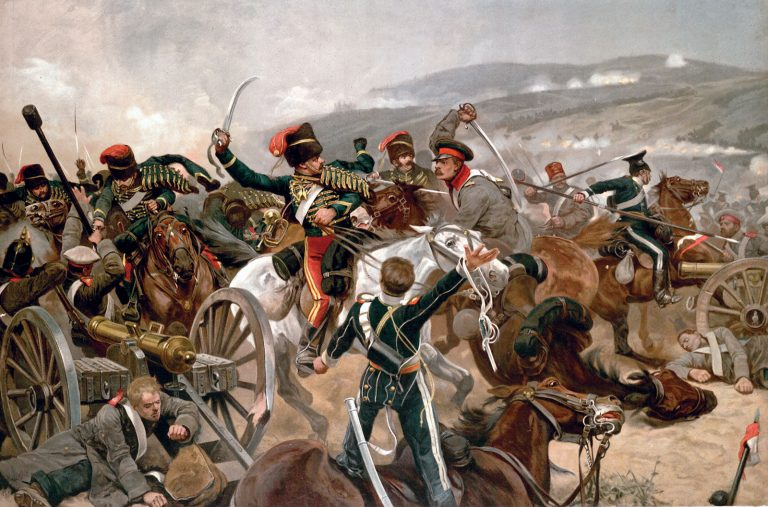
The two types of swords commonly seen in Mounted Combat in the Western European tradition have been the knight’s longsword and the cavalry sabre, which came into use later and lasted until horses were no longer used for battlefield charges.
Both these swords are strong cutting weapons, although the sabre typically has only one cutting edge to the longsword’s two, is not as easy to couch in the thrust, and lacks the long grip and pommel useful for disarms. The advantage of the sabre however, is that its shorter, slightly curved blade is quicker and easier to draw from under the reins.
The measure closes fast from horseback, and the ability to switch from thrust to cut is an important feature of a cavalry sword. Anything longer than a longsword may as well be considered a lance when mounted. Greatswords were not used from horseback as they were too heavy to use one-handed. Rapiers might have been worn for show by mounted nobles, but their length and lack of cutting power would have made them impractical for mounted combat, as would the ornate guards which tend to entangle reins.
Other Mounted Weapons
As the segments from the Bayeux Tapestry at the top and below show, a variety of other weapons were used in mediaeval mounted combat.
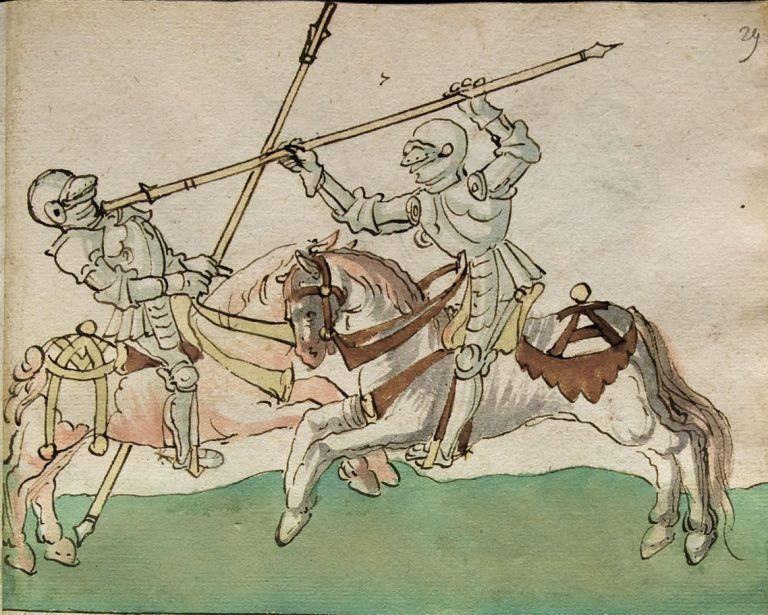
Spear: Perhaps the oldest mounted weapon, the spear, both thrown and couched, has been used since the days of chariot warfare. These mounted polearms developed different shaped heads and shafts depending on their use. The jousting lance evolved from the spear, and its use continues in modern-day tent-pegging
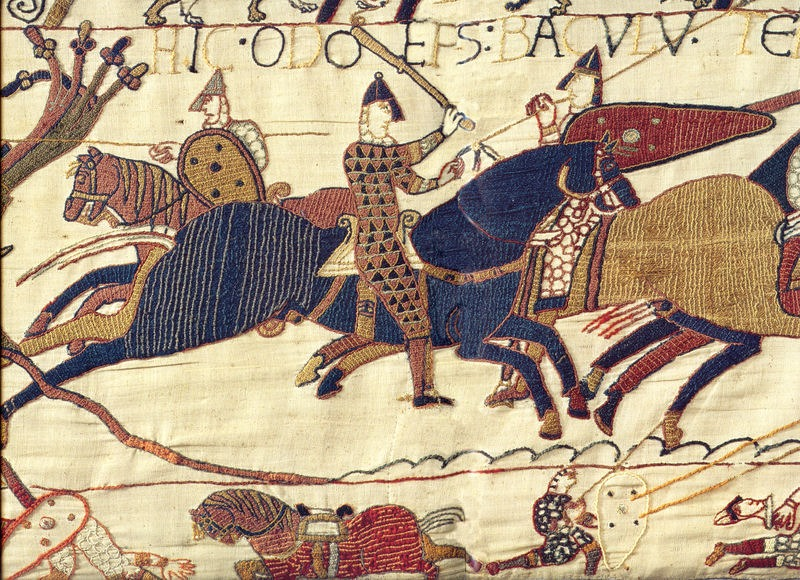
Clubs and maces: There are several instances in the Bayeux Tapestry of ornate maces and simple wooden clubs. In later years mounted knights would often use a short-handled flail, mace or morning-star as a back-up to the sword.
Bows: Although there are visual depictions of mounted archers in mediaeval documents, there was not the same culture of horse-archery in the West as there was in Eastern Europe and Asia. Many of the archers in European armies were more like dragoons, riding to battle, but shooting from the ground. However, lighter cross-bows and stone-bows were used mounted for hunting and warfare in the Renaissance and Early Modern periods.
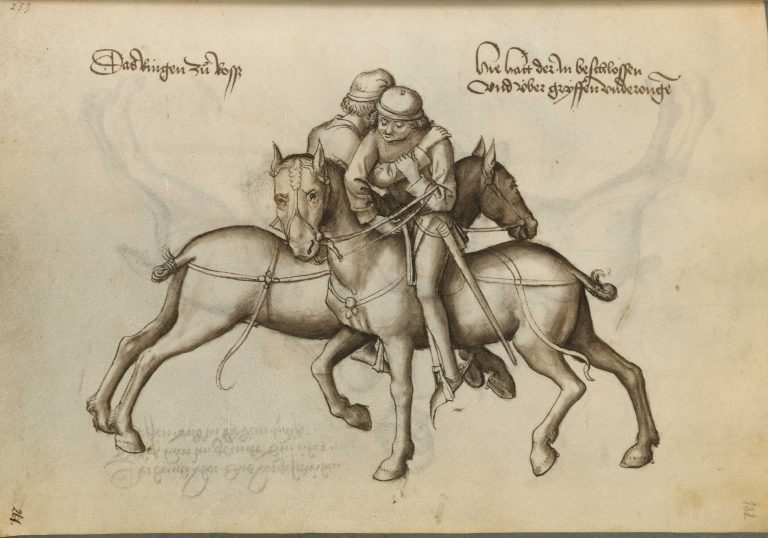
Grappling: Not a weapon as such, but grapples and throws were an important part of mounted combat. They were accomplished unarmed, or with pommels, spear shafts, or whatever part of a weapon was to hand.
A knights training thoroughly explored all of these modes of combat from the ground and the saddle and they continue to be strong parts of European martial arts training in schools like Academie Duello and Academie Cavallo.

About the Author
Jennifer Landels
Mounted Combat Instructor
Jennifer Landels heads up Academie Duello's Cavaliere Program. She has been swordfighting since 2008, and riding since before she could walk. She started the program as an excuse to combine those passions.